



Don't serve it - save it! Cock of the Woods for Banknote Fame

It started, as many good stories do, in the kitchen....
While foraging for a seasonal game menu, the Mackaness family stumbled across the Capercaillie — a grouse so magnificent, so gloriously named, that it stopped the conversation entirely.
Often described as a flamboyant cross between a turkey and a peacock, the Capercaillie also known, rather brilliantly, as the cock of the woods once thrived in Britain's ancient forests. It disappeared from these shores around the time Rudding House was built in the late 1700s. Reintroduced to Scotland in 1837, it is now facing a second extinction.
'It sounded delicious,' a family spokesperson admitted. 'But once we realised how rare it is, we decided to save it, not serve it.'
That decision, it turns out, was just the beginning.
From menu to money
In March, the Bank of England announced that UK wildlife would feature on future banknotes.
Having developed a soft spot for Britain's most charmingly named bird, they are now officially championing the Capercaillie for currency stardom. The most ‘famous’ grouse might be on a whisky bottle... however wildlife experts will shortlist species for a public vote this summer, so the family are keeping their fingers crossed.
'Frankly, we're so fond of it we're hoping it finds its way into your wallet as legal tender.'
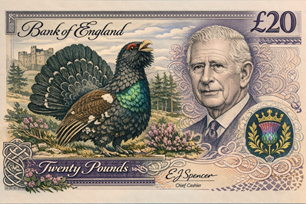
A bird worth saving
The Capercaillie's story feels, in many ways, like a fitting one for Rudding Park.
The resort sits on what was once the Forest of Knaresborough — a royal hunting ground where Henry VIII's deer roamed freely. A 700-year-old oak tree still stands on the estate today proving that... some things are better saved than served.

We are proud to be a part of Green Tourism. Read our Sustainability Policy.